What Is Meant by the Term the Art of No Detourism
| Term | Definition |
| Access | Permission, liberty, or power to enter, approach, or laissez passer to and from a place or to arroyo or communicate with a person or matter. |
| Accessible | Providing for the ability of individuals with varied capabilities the opportunity to reach, participate, or understand. |
| Authentic | Free from error especially as the consequence of care; conforming exactly to truth or to a standard. |
| Active travel | Making journeys by physically active ways, such as walking or cycling. |
| Adolescent | A young person who is developing into an developed. |
| Advancement | Promotion or elevation to a higher rank or position. |
| Air pollution | The presence of chemicals or compounds in the air which are commonly not nowadays and which lower the quality of the air. The send sector is responsible for a big proportion of urban air pollution. |
| Animal welfare | Animal welfare means how an animate being is coping with the conditions in which it lives. The universally recognized "Five Freedoms", published in 1965, describe the right to welfare of animals under homo control. According to this concept, an animal's primary welfare needs tin can be met past providing: freedom from hunger, malnutrition and thirst; freedom from fear and distress; freedom from physical and thermal discomfort; freedom from pain, injury and disease; and freedom to express normal patterns of behaviour. |
| Appropriate behavior | Behaviour of any individual involved with a tourism business that is characterized past respect for the sociocultural and ecological cloth of a location. |
| Archaeological artefacts | Any object manufactured, used or modified past humans. Common examples include tools, utensils, fine art, nutrient remains, and other products of human activity. |
| Artefact | Something created by humans normally for a practical purpose; especially an object remaining from a item period |
| Assurance | Demonstrable testify that specified requirements relating to a product, process, system, person or body are fulfilled (adapted from ISO 17000). Synonyms: certification, verification |
| Authentic | Worthy of credence or belief as conforming to or based on fact; non false or imitation : existent, actual; true to ane'south own personality, spirit, or character; made or done the aforementioned way equally an original; |
| Basic services | Includes primary education, health care, make clean water supply, sanitation, solid waste and energy supply |
| Benefit | To add together positive value |
| Biodiversity | Variability among living organisms from all sources including, inter alia, terrestrial, marine and other aquatic ecosystems and the ecological complexes of which they are role; this includes diversity within species, betwixt species and of ecosystems |
| Capacity | The potential or suitability for holding, storing, or accommodating (GSTC-D C6/D2) |
| Capacity (2) | The ability or facility to human activity (GSTC-D A5) |
| Captive | Bars; kept inside bounds |
| Carbon Dioxide | A greenhouse gas produced through respiration and the decomposition of organic substances. Combustion of fossil fuels is primarily responsible for increased atmospheric concentrations of this gas. |
| Carbon Footprint | The total amount of greenhouse gases produced to straight and indirectly support human activities, ordinarily expressed in equivalent tons of carbon dioxide (CO2). |
| Carbon Neutral | Achieving net zippo carbon emissions by balancing a measured corporeality of carbon released with an equivalent amount sequestered or showtime, or ownership enough carbon credits to make upwardly the difference. |
| Certification | Voluntary, third political party assessment, through an audit, of a tourism enterprise for conformity to a standard. |
| Child | Young human beingness, boy or girl; person who has not reached historic period of discretion. |
| Child Labour | Work that deprives children of their childhood, their potential and their dignity, and that is harmful to physical and mental development. It refers to piece of work that is mentally, physically, socially or morally unsafe and harmful to children; and interferes with their schooling past depriving them of the opportunity to attend school; obliging them to exit schoolhouse prematurely; or requiring them to attempt to combine school attendance with excessively long and heavy work |
| Climate Change | Climate change refers to a statistically significant variation in either the mean country of the climate or in its variability, persisting for an extended period (typically decades or longer). Climate change may be due to natural internal processes or external forcings, or to persistent anthropogenic changes in the composition of the atmosphere or in land use. |
| Climate change adaptation | Anticipating the agin effects of climate change and taking appropriate action to forbid or minimise the damage they can cause, or taking advantage of opportunities that may ascend. |
| Climate change mitigation | Actions to limit the magnitude or rate of long-term climate change and its related effects. Climatic change mitigation generally involves reductions in human (anthropogenic) emissions of greenhouse gases (GHGs). |
| Climate Neutral | The concept of reducing or offsetting whatsoever greenhouse gases produced by any entity (individual, business, country, etc.) so as to create a 'neutral' result on global warming for that entity |
| CO2 Offsets | A carbon offset is a reduction in emissions of carbon dioxide or greenhouse gases made in lodge to recoup for or to offset an emission fabricated elsewhere |
| Code of conduct | A set up of rules that guide what is and is non acceptable or expected behaviour in a given situation |
| Code of practise | Ready of guidelines and/or regulations to be followed by members of some profession, trade, occupation, system etc.; does not normally accept the force of law |
| Collaboration | The human action of working together with other people or organizations to create or accomplish something |
| Communal rights | Rights held in mutual by members of a community |
| Community consent | Frequently annotated as free, prior, and informed, consent, customs consent indicates approving of any outside incursion or development into community lands or practices. Consent does not crave unanimity amongst all of the members of a community. Rather, consent should be determined pursuant to customary law and practise, or in another way agreed upon past the community. |
| Compliance | Conformity in fulfilling official requirements. |
| Concession | A grant of state or holding peculiarly by a authorities in return for services or for a item utilize; the right to undertake and profit past a specified activity. |
| Congestion | A state of affairs in which there is too much traffic and movement is difficult |
| Conservation | Planned management of a natural resources to foreclose exploitation, devastation, or neglect |
| Conservation management | Conservation management is a planned intervention in social club to maintain a species or habitat in a favourable condition |
| Continuous improvement | An ongoing endeavour to make incremental improvements to products, services or processes over time. Processes are constantly audited and modified based on their efficiency, effectiveness and sustainability |
| Corrective Action Programme | Cosmetic action provides that a problem has been recognized, corrected, and proper controls installed to brand certain that it does not happen again. |
| Crisis management | The awarding of strategies designed to aid an organization deal with a sudden and meaning negative outcome. |
| Benchmark | A standard, rule, or test on which a judgment or determination tin can be fabricated |
| Cultural | Of or relating to a particular grouping of people and their habits, beliefs, traditions, etc. |
| Cultural artefact | Any object manufactured, used or modified by humans that expresses the particular characteristic of a people or peoples, including manner of life, spiritual beliefs, or a collective sense of history. |
| Cultural assets | Inherited assets which people identify and value as a reflection and expression of their evolving knowledge, beliefs and traditions. Cultural assets may be tangible or intangible. |
| Cultural heritage | Cultural heritage is the legacy of concrete artefacts and intangible attributes of a grouping or society that are inherited from by generations, maintained in the nowadays and bestowed for the benefit of future generations. |
| Cultural landscape | Landscapes, regardless of calibration, that have been affected, influenced, or shaped past homo interest |
| Culturally advisable | Respecting and accepting cultural difference |
| Culturally or historically sensitive sites | Sites which, past reason of their cultural or historical significance, telephone call for tact, intendance, or caution in their treatment. |
| Cumulative bear on | The touch of a series of repeated or different events or deportment which may be greater than the sum of their private impacts. |
| Client satisfaction | A measure of how products and services supplied by a company meet or surpass customer expectation. |
| Decent work | Decent work involves opportunities for work that is productive and delivers a fair income, security in the workplace and social protection for families, better prospects for personal development and social integration, freedom for people to express their concerns, organize and participate in the decisions that affect their lives and equality of opportunity and treatment for all women and men. |
| Destination | A destination is a geographical area consisting of all the services and infrastructure necessary for the stay of a specific tourist or tourism segment. Destinations are the competitive units of incoming tourism. |
| Destination Management System | Organization responsible for the implementation of strategic tourism policies, product development and co-ordinated management of all the elements that make upward a destination (accommodation, attractions, admission, marketing, human resources, prototype). The form and structure of a DMO can vary, depending on the context in which it operates. |
| Directly economic contribution | The straight effects from initial spending which creates additional action in the local economic system |
| Discrimination | Unequal handling of persons on grounds which are not justifiable in constabulary |
| Economic benefit | Any benefit(s) that can be quantified in terms of money generated, such as cyberspace income, revenues, etc. It can also be money saved when discussing a policy to reduce costs. |
| Ecosystem | All the living things in an area and the way they touch on each other and the surround |
| Emergency response plan | A fix of written procedures for dealing with emergencies that minimize the impact of the outcome and facilitate recovery from the consequence |
| Environmental certification | Ways by which a product, procedure, business or service is publicly identified every bit having been certified or verified in compliance with an environmental standard. |
| Ecology Bear on Assessment | Ecology Impact Assessment (Eia) is a tool used to place the environmental, social and economical impacts of a project prior to decision-making. It aims to predict environmental impacts at an early stage in project planning and design, find means and means to reduce adverse impacts, shape projects to conform the local environment and nowadays the predictions and options to determination-makers. |
| Environmentally sustainable | A factor or do is environmentally sustainable if it contributes to the quality of environment on a long-term basis. Information technology is a charge per unit at which renewable resource harvest, pollution creation, or non-renewable resource depletion tin be connected indefinitely without damage to the surroundings. |
| Equitable | Dealing fairly and equally with all concerned |
| Established | Accepted or respected because of having existed for a long period of time |
| Exploitation | The act of treating people unfairly in club to benefit from their efforts or labour |
| Off-white and simply compensation | Compensation for belongings that places a property owner in the aforementioned position as before the property is taken. Only compensation is usually the fair market value of the property taken. |
| Fair merchandise | Off-white trade is based on dialogue, transparency and respect, seeking greater equity in international merchandise. It contributes to sustainable evolution by offer better trading conditions to, and securing the rights of, marginalized producers and workers – especially in the S. 'Fairtrade' or 'Off-white Trade' standards incorporate minimum social, economic and environmental requirements, which producers must encounter to be certified. |
| Complimentary prior and informed consent | A specific correct that pertains to ethnic peoples and is recognised in the Un Declaration on the Rights of Indigenous Peoples (UNDRIP), allowing them to requite or withhold consent to a project that may affect them or their territories. UNDRIP gives specific meaning to the terms 'free', 'prior', 'informed' and 'consent'. |
| Free roaming wildlife | Undomesticated beast species that alive wild in an surface area |
| Gastronomy | Culinary customs or style |
| GHG emissions | A measurement associated with a specific prepare of gases associated with human being activities that alter the World's energy balance and thus its climate. Greenhouse gases (GHG) include h2o vapour, carbon dioxide, methane, and nitrous oxide. Awarding of the global warming potential (GWP) of each GHG allows all such emissions to be translated into a common unit, Carbon Dioxide Equivalent (CO2e,) which compares and relates all GHG emissions and can be reported as a single combined quantity. |
| Global Sustainable Tourism Criteria | The Global Sustainable Tourism Council (GSTC) Criteria serve every bit the global standards for sustainability in travel and tourism. The GSTC Criteria are used for pedagogy and awareness-raising, policy-making and every bit a basis for certification. The Criteria are the minimum, not the maximum, which businesses, governments, and destinations should achieve to approach social, environmental, cultural, and economic sustainability. |
| Greenhouse Gas | Atmospheric gases that contribute to the greenhouse outcome and sustain life on globe. Increasing concentrations of greenhouse gases in the atmosphere are altering the habitat humans evolved to thrive in; this is a procedure called global warming or climatic change. Greenhouse gases include: carbon dioxide, water vapor, nitrous oxide, ozone, marsh gas, and CFCs |
| Gray h2o | Collected rainwater and wastewater generated by household processes, such as washing dishes, laundry, and bathing |
| GSTC-I Accredited | Approved by GSTC as a certification body competent to certify organisations to a GSTC-Recognized standard |
| GSTC-I Recognized | Applies to a sustainable tourism standard which has been deemed equivalent to the GSTC-I / D Criteria for sustainable tourism |
| Habitat | A terrestrial, freshwater, or marine geographical unit of measurement or airway that supports assemblages of living organisms and their interactions with the not-living surroundings. |
| Harassment | Unwanted behaviour that is found offensive past the recipient |
| Harmful substances | Chemical substances that could pose a threat to the environment and human health. |
| Harvesting | The activity of picking or collecting plants, animals, or fish to eat or for other human being employ |
| Hazard | A potential source of harm or adverse outcome on a person or persons |
| Loftier Biodiversity Value | A concentration of biological diversity including owned species, and rare, threatened or endangered species, that is significant at the global, regional or national level. |
| Historical significance | Significance is defined as the importance of a property to the history, architecture, archaeology, engineering, or civilization of a community, a State, or the nation. Significance may be based on association with historical events; clan with a pregnant person; distinctive physical characteristics of blueprint, structure, or course; and potential to yield important information. |
| Human rights | Human being rights are the basic rights and freedoms that all humans should be guaranteed. They are universal, apply equally to all, and are founded on the principle of dignity for every human being. They are elaborated in the thirty Articles of the Universal Declaration of Human Rights (1948). |
| Human trafficking | The recruitment, harbouring or transporting of people into a situation of exploitation through the utilize of violence, charade or coercion and forced labour |
| Impact | The contribution of an action or intervention to an outcome or change in social, economic or ecology condition. The contribution may be intended or unintended, positive or negative, long-term or short-term. |
| Indicator | Quantitative or qualitative factor or variable that provides a simple and reliable means to measure achievement of outcomes, to reflect the changes continued to a standards system, or to help assess the performance of an arrangement. |
| Indigenous communities | Tribal peoples in independent countries whose social, cultural, and economic conditions distinguish them from other sections of the national community, and whose status is regulated wholly or partially by their own customs or traditions or past special laws or regulations |
| Indigenous peoples | Unremarkably considered to include cultural groups and their descendants who have a historical continuity or clan with a given region, or parts of a region, and who currently inhabit or accept formerly inhabited the region either earlier its subsequent colonization or annexation, or aslope other cultural groups during the formation of a nation-state, or independently or largely isolated from the influence of the claimed governance by a nation State, and who furthermore have maintained, at least in part, their singled-out linguistic, cultural and social / organizational characteristics, and in doing and then remain differentiated in some degree from the surrounding populations and dominant culture of the nation Country. Too include people who are self-identified equally indigenous, and those recognized as such by other groups |
| Ethnic rights | The private and collective rights of Indigenous peoples to maintain and strengthen their own institutions, cultures and traditions, and to pursue their development in keeping with their own needs and aspirations. The United Nations Declaration on the Rights of Ethnic Peoples prohibits discrimination against indigenous peoples, and promotes their full and effective participation in all matters that business organisation them. |
| Indirect economic contribution | Multiplier effects which result from spending with suppliers by a sector or industry |
| Infrastructure | Construction needed to back up the proper performance or economic development of an area, including: roads, railway lines, harbours, airport runways, water, electricity, other power supplies, sewerage disposal systems and other utilities. |
| Innocuous | Harmless |
| Intangible heritage | Traditions or living expressions inherited from our ancestors and passed on to our descendants, such every bit oral traditions, performing arts, social practices, rituals, festive events, knowledge and practices apropos nature and the universe or the knowledge and skills to produce traditional crafts. |
| Integrity | The quality of existence whole and complete. Ecological integrity is defined as the total potential of indigenous biotic and abiotic factors, and natural processes, performance in sustainable communities, habitats, and landscapes. |
| Intellectual holding | Intellectual holding (IP) refers to creations of the mind, such as inventions; literary and artistic works; designs; and symbols, names and images used in commerce. IP is protected in police. Special considerations apply to ethnic and local communities concerning the protection, promotion and preservation of traditional knowledge, traditional cultural expressions and genetic resource. |
| Estimation | An educational process that is intended to stimulate and facilitate people'south understanding of identify, so that empathy towards conservation, heritage, civilization and landscape is developed, revealing the significance and meanings of natural and cultural phenomena to visitors, commonly with the intent of providing a satisfying learning feel and encouraging more sustainable behaviour |
| Invasive species | Species which has been introduced to an surround where it is non-native, or alien, and whose introduction causes ecology or economic damage or harm to human health. |
| Inventory | An itemized listing of current avails; a stock have of natural resource at a given point in time. |
| IUCN Red List | A compendium of data on the taxonomy, conservation condition and distribution of plants, fungi and creature species that have been globally evaluated using the IUCN Ruddy List Categories and Criteria. This arrangement is designed to determine the relative risk of extinction, and the main purpose of the IUCN Red List is to catalogue and highlight those plants and animals that are facing a higher take a chance of global extinction. |
| Jeopardize | To expose to danger or run a risk |
| Key resource | The assets (both fabric and social resources) and activities required for a means of living |
| Labour rights | Labour rights or workers' rights are a group of legal rights and claimed human rights having to exercise with labour relations between workers and their employers, usually obtained under labour and employment police force. Since 1919, the International Labour Organization has maintained and developed a system of international labour standards aimed at promoting opportunities for women and men to obtain decent and productive work, in weather of liberty, disinterestedness, security and dignity. |
| LGBT | Acronym standing for lesbian, gay, bisexual, transgender, or queer. An umbrella term for employ when labelling topics pertaining to sexuality orientation and gender identity. |
| License | Legal permission granted to an private, business organization, or organization to do something. The licence confers a correct which the person or firm did not previously possess and is a legal agreement which may contain restrictions as to how the licence is employed. |
| Light pollution | The excessive, misdirected, or invasive use of outdoor artificial lighting |
| Livelihood | A livelihood comprises the capabilities, assets (including both material and social resource) and activities required for a means of living. |
| Living civilisation | Living culture, or intangible cultural heritage, refers to the practices, representations, expressions, knowledge and skills handed down from generation to generation. This heritage provides communities with a sense of identity and is continuously recreated in response to their environment |
| Living organism | Any living system (such every bit animal, found, fungus, or micro-organism) |
| Living wage | The remuneration received for a standard piece of work week by a worker in a particular place sufficient to afford a decent standard of living for the worker and her or his family. Elements of a decent standard of living including food, water, housing, educational activity, health care, transport, article of clothing, and other essential needs including provision for unexpected events. |
| Local | The area of and immediately around the destination or location of business operations. The size of the area can vary depending on the physical geography and population density and distribution. |
| Local customs | The collection of people living in the immediate surface area of a destination or tourism business and potentially affected socially, economically, or environmentally by its presence or performance. |
| Local distinctiveness | The essence of what makes a identify special: the sum of landscape, wildlife, archaeology, history, traditions, buildings and crafts – everything that makes somewhere truly unique. |
| Local minorities | A social group or category of people from within a specified surface area in relation to the destination or tourism business concern (see definition for "local") who are unlike from the larger group in the country or expanse in some way. Ofttimes refers to groups that suffer from disparities of power or unequal handling on the basis of that identity or to situations in which such groups are numerical minorities with respect to dominant cultural or ethnic majorities. |
| Local residents | Those living in the immediate area of a destination or tourism business organization and potentially affected socially, economically, or environmentally past its presence or performance. |
| Local supplier | An private or an enterprise from within a specified surface area in relation to a tourism business (see definition of "local") that provides a good or service to the tourism business concern |
| Locally appropriate | Commensurate with the sociocultural and ecological norms of a particular surface area, especially every bit it pertains to avoiding harm to local aesthetics, customs, or biodiversity |
| Low-impact transportation | A transport system that uses less fossil fuel, which may involve a combination of: moving from individual to public transport; reducing the overall corporeality of travel; fuel efficiency; and alternative fuels (including muscle ability). |
| Direction | The organization and coordination of activities in order to achieve defined objectives. |
| Direction position | A position within a business responsible for one or more than of the following activities: planning, directing and overseeing the operations and fiscal wellness of a business or operating unit inside an organization; overseeing and leading the piece of work of a group of people; planning and maintaining work systems, procedures, and policies that enable and encourage the optimum performance of people and other resources. |
| Maximize | To brand the almost of; to increase to a maximum level |
| Minimize | To reduce; to keep to a minimum |
| Modern slavery | Comprises slavery, servitude, forced and compulsory labour and human trafficking. The common factors are that a victim is, or is intended to be, used or exploited for someone else's (usually financial) gain, without respect for their human rights. |
| Multi-stream drove | The process of separating recyclables by textile blazon prior to collection |
| Native species | Plants, animals, or other living organisms that are found, or are known to accept been found, as part of local natural ecosystems. |
| Natural surface area | An area with a characteristic association of wildlife and natural features. Each natural area has a unique identity resulting from the interaction of wild fauna, landforms, geology, land use and human impact. |
| Natural assets | Assets of the natural environment, including biological and physical assets |
| Natural heritage | Natural features consisting of physical and biological formations or groups of such formations, which are of outstanding universal value from the aesthetic or scientific point of view; geological and physiographical formations and precisely delineated areas which institute the habitat of threatened species of animals and plants of outstanding universal value from the betoken of view of scientific discipline or conservation; natural sites or precisely delineated natural areas of outstanding universal value from the point of view of science, conservation or natural beauty |
| Neighboring communities | A community that is located immediately adjoining or relatively nigh to a tourism business or to the areas in which the tourism business operates |
| Noise pollution | Whatsoever agonizing or unwanted dissonance that interferes with or harms humans or wildlife |
| Non-invasive | Having no tendency to spread to a degree believed to crusade damage to the environment, homo economic system or human wellness. Some native species may exist invasive. |
| Offsetting | In one case GHG emissions take been calculated and reduced where possible, a number of schemes exist to offset what cannot be reduced, through the purchase of certified emission reductions. The offsets are credits for reductions in greenhouse gas emissions made at another location, such equally a wind farm or a make clean cook stove project, and each credit represents i ton of emissions avoided or captured. |
| Pesticide | Any substance or mixture of substances that is used to preclude, destroy or control unwanted pests — harmful insects, small animals, wild plants, and other unwanted organisms including vectors of human or creature disease. Pesticides are used because of their toxic properties towards target species but may too cause harm to not-target species. The manner of activeness which makes them effective pesticides also makes them chancy to humans and / or the surroundings, often in subtle means. It is of import to understand associated risks and to limit use of these substances to necessary situations and limit potential damage to human health and the environment. |
| Planning guidelines | Guidance on development in or affecting a specified area, aimed primarily at planners, developers, builders and householders |
| Pollution | Presence of thing (gas, liquid, solid) or energy (heat, noise, radiation) whose nature, location, or quantity directly or indirectly alters characteristics or processes of whatsoever part of the environment, and causes (or has the potential to cause) damage to the condition, health, condom, or welfare of animals, humans, plants, or holding. |
| Population viability | The ability of a population or sub-population of a species to persist in an surface area |
| Preferred supplier list | A complete list of businesses and organizations that provide the tourism business concern with appurtenances and supplies |
| Promotion | Activeness taken to make people aware of something or somewhere in club to increase its sales or popularity |
| Promotional materials | Whatever sales promotional, marketing or advertisement materials (including websites) produced or distributed past or on behalf of the tourism business in connexion with its products or activities, or which otherwise brand reference to or express or imply a connection with the tourism business. |
| Properly managed | Administered in a manner that eliminates or minimizes take a chance in order to avoid internal and external damage or destruction |
| Protected Areas | A conspicuously defined geographical space, recognized, dedicated and managed, through legal or other effective ways, to achieve the long-term conservation of nature with associated ecosystem services and cultural values. |
| Public participation | A procedure that directly engages the public in controlling and gives full consideration to public input in making that decision |
| Purchasing policy | Documented arrangement and procedures for acquiring appurtenances and services, including rules and guidelines, sourcing policies, and favored or approved suppliers. |
| Quality | The degree of value or excellence of a product or service; can sometimes refer to a high level of value or excellence. |
| Recycling organization | Organization to collect and process waste product materials that would otherwise be thrown abroad and turn them into new products and services |
| Regular basis | With a routine frequency |
| Regulated | Under the control of law or constituted authority |
| Rehabilitate | Process of returning something to its original condition |
| Renewable energy | Renewable energy is derived from natural processes that are replenished constantly. In its various forms, it derives directly or indirectly from the sun, or from heat generated deep within the earth. Included in the definition is energy generated from solar, wind, biomass, geothermal, hydropower and ocean resources, and biofuels and hydrogen derived from renewable resources. |
| Replication | The act of making or doing something once again in exactly the aforementioned style |
| Resettlement | The process of moving people to a different place to live, considering they are no longer allowed to stay in the area where they used to alive |
| Respect | Providing consideration and deference to the actions, behavior, or existence of another person or thing |
| Responsible consumption | A concerted effort to buy and use goods and services that have low ecology footprints and provide a positive economic touch where feasible |
| Restoration | Restoration is the ecological process of restoring a site to a natural landscape and habitat, safe for humans, wildlife, and establish communities, post-obit some form of ecological deposition or devastation. |
| Adventure management | The identification, analysis, assessment, control, and avoidance, minimization, or elimination of unacceptable risks. |
| Take chances reduction | Addressing a ready of risks and then as to reduce either the likelihood of their occurrence, or the upshot of their occurrence, or both |
| Run-off | Water menstruum over the ground surface to the drainage system or straight to watercourse. This occurs if the ground is impermeable, is saturated or if rainfall is particularly intense. |
| Sensitivity | Degree to which a site may be readily affected or changed by external influences |
| Sexual exploitation | Sexual exploitation is the sexual corruption of men and women of all ages through the exchange of sex or sexual acts for drugs, food, shelter, protection, other basics of life, and/or money |
| Pregnant | Of a noticeably or measurably large amount; having or probable to have influence or effect |
| Single-use item | A product or packaging intended to throw out after only 1 apply |
| Social Touch Assessment | The process of analysing, monitoring, and managing the intended and unintended social consequences, both positive and negative, of planned interventions (policies, programs, plans, projected) and whatsoever social change processes invoked by those interventions. Its chief purpose is to bring about a more sustainable and equitable biophysical and human environment |
| Soil contaminants | Soil contaminants are chemicals, nutrients or elements that are more than normally or naturally full-bodied in the soil every bit a outcome of human action. Solvents, pesticides and petroleum products are localized contaminants found in a small-scale geographic area, for example from a leaking fuel storage tank. |
| Solid Waste Management Plan | A strategy to reduce the quantity of solid waste that is delivered to landfill, by reducing the sources of waste matter and reusing or recycling equally much as possible of the remainder. As a direction plan, information technology should have concrete goals and objectives, too as performance indicators |
| Special needs | The private requirements of a person with a mental, emotional, or physical inability |
| Species | A course of animals, plants or other organisms whose members have the aforementioned primary characteristics and are able to brood with each other |
| Spiritually important sites | A site, object structure, area or natural feature or area, held by national Governments or communities to exist of particular importance in accordance with the customs of an indigenous or local community because of its religious, spiritual or cultural significance |
| Stakeholder | Individual or grouping that has an interest in any decision or activeness of an organization. |
| Supply chain | The many components, including accommodation, transport and excursions, and likewise bars and restaurants, handicrafts, nutrient production, waste disposal, and the infrastructure that supports tourism in destinations |
| Sustainability | Using resource in an environmentally responsible, socially fair and economically viable manner, and then that by meeting the needs of current users, the possibility of their use by futurity generations is not compromised |
| Sustainability Direction System | A management system (fix of interrelated elements) to institute a sustainability policy and objectives and processes to accomplish those objectives. |
| Sustainable Destination Strategy | A sustainable destination strategy is a plan of action , based on stakeholder consultation and appointment, which sets out the agreed vision, objectives and direction for sustainable tourism in a destination and designed to exist used as a basis for identifying destination direction deportment. |
| Sustainable investment | An investment approach that considers social and environmental good as well as financial return |
| Sustainable materials | Sustainable materials provide environmental, social and economical benefits while protecting public health and environment over their whole life wheel, from the extraction of raw materials until the terminal disposal. |
| Sustainable practices | Sustainable practices are employed in order to eliminate negative environmental impacts in the design, construction, restoration or demolition of a edifice or construction. Examples include incorporating energy efficiency, minimizing the carbon footprint over the life wheel of a structure, making use of natural lite and depression affect materials and connecting users with the natural environment. |
| Sustainable tourism | Sustainable tourism takes full account of its electric current and future economic, social and environmental impacts, addressing the needs of visitors, the industry, the environment and host communities. Sustainable tourism should make optimal utilise of environmental resource that constitute a cardinal chemical element in tourism development, maintaining essential ecological processes and helping to conserve natural heritage and biodiversity; respect the sociocultural authenticity of host communities, conserve their built and living cultural heritage and traditional values, and contribute to intercultural understanding and tolerance; ensure viable, long-term economic operations, providing socioeconomic benefits to all stakeholders that are adequately distributed, including stable employment and income-earning opportunities and social services to host communities, and contributing to poverty consolation. |
| Sustainable utilization | Use in a fashion and at a rate that does non atomic number 82 to the long-term degradation of the environment, thereby maintaining its potential to meet the needs and aspirations of present and future generations |
| Threatened Species | Umbrella term for whatsoever species categorized as Critically Endangered, Endangered or Vulnerable by the IUCN Red List of Threatened Species. |
| Tourism assets | A facility or feature of value for its benefit or utility to the visitor experience |
| Tourism-related enterprises | Enterprises delivering any of a range of products which together incorporate the company experience. These may include transport, accommodation, catering, natural resources, cultural, recreational, entertainment and other facilities and services, such as shops and banks, tour guides and other tour operators. |
| Tradition | An inherited, established, or customary design of thought, action, or behaviour |
| Transparent | Free from pretence or deceit |
| Values | Stable long-lasting standards by which people order their lives and make their choices |
| Verification | Verify: to prove, bear witness, find out, or land that (something) is true or correct |
| Visitor management | Managing visitor movements and influencing company behaviour in society to protect the values and attributes of a destination or site and contribute to a high quality visitor experience |
| Wastewater | Wastewater is whatever water that has been adversely affected in quality by anthropogenic influence. Wastewater can originate from a combination of domestic, industrial, commercial or agricultural activities, surface runoff or stormwater, and from sewer inflow or infiltration. |
| Water quality | The physical, chemical, biological and aesthetic (appearance and smell) characteristics of h2o |
| H2o risk | The probability and severity of an entity experiencing a deleterious water-related event. The Aqueduct Water Take chances Atlas maps aggregated scores of 12 fundamental h2o indicators in 15,000 watersheds around the world. Alternatively, WWF has a Water Take a chance Filter at http://waterriskfilter.panda.org/. Overall water risk identifies areas with higher exposure to water-related risks and is an aggregated measure of all selected indicators from the Physical Quantity, Quality and Regulatory and Reputational Risk categories. |
| Water stewardship | Water stewardship is almost taking action to help ensure that h2o is managed sustainably as a shared, public resource. Information technology tin can be defined equally the use of water that is socially equitable, environmentally sustainable and economically benign, accomplished through a stakeholder-inclusive process that involves site- and catchment-based actions. |
| Wild beast | A fellow member of whatsoever animal species known to be, or to accept once been, capable of living in a natural, undomesticated state |
| Wildlife | Living things that are neither human nor domesticated |
| Wildlife interaction | Whatever homo run into or contact, intentional or otherwise, with a species of creature living, or found growing, in its natural surroundings |
Sources: Aimee Russillo, American Hotel & Lodging Clan (AH&LA), Amos Bien, Centre for Biological Variety (CBD), David Callum Lee Dark-brown, Environmental Protection Agency – U.s.a. (EPA), European Commission (EC), Global Development Research Center (GDRC), International Association for Bear upon Cess (IAIA), International Labor Organization (ILO), Hitesh Mehta, International System of Standards (ISO), International Social and Environmental Accreditation and Labelling Alliance (ISEAL), Merriam-Webster, Organisation for Economic Cooperation and Development (OECD), Princeton University, Province of Ontario Ministry of Environment, Programa de Certificação em Turismo Sustentável, Sustainable Forestry Initiative (SFI), United States National Park Service (USNPS), United Nations (UN), Un Childrens' Fund (UNICEF), United Nations Educational Social and Cultural System (UNESCO), United Nations Surround Programme (UNEP), Un Institute for Training and Enquiry (UNITAR), Globe Intellectual Property Organization (WIPO), World Resources Institute (WRI)

Learn more of the GSTC Criteria
The GSTC Criteria serve every bit global standards for sustainability in travel and tourism. The Criteria are used for educational activity, policy-making for businesses and authorities agencies, measurement and evaluation, and every bit a ground for certification. They are the result of a worldwide effort to develop a common linguistic communication virtually sustainability in tourism.
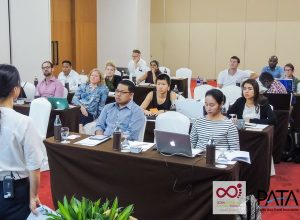
Join a Preparation
The GSTC Sustainable Tourism Grooming Program (STTP) offers practical insights and effective steps to help you improve your sustainability practices led by expert GSTC Trainers.
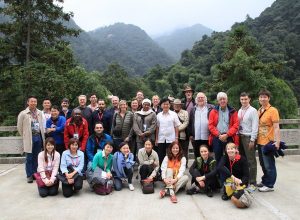
Join GSTC as a Member
Condign a GSTC Member ways actively participating in our global community that represents a broad range of tourism stakeholders – leading international bout operators, government organizations and national tourism boards, and local and international hospitality brands.
Source: https://www.gstcouncil.org/gstc-criteria/glossary/
0 Response to "What Is Meant by the Term the Art of No Detourism"
Post a Comment